From a grandmother’s sewing machine to a vision for economic opportunity
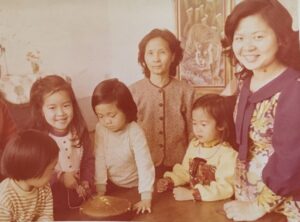
For Ming-Ming Tung-Edelman, the inspiration behind CareMakers Collective began with her grandmother’s sewing machine in Taiwan.
Her grandmother, whom she called Ama, raised three children as a single mother, supporting her family through sewing. One of the last dresses she made for Ming-Ming traveled with her when she immigrated to the United States, a reminder of how practical skills can create economic security.
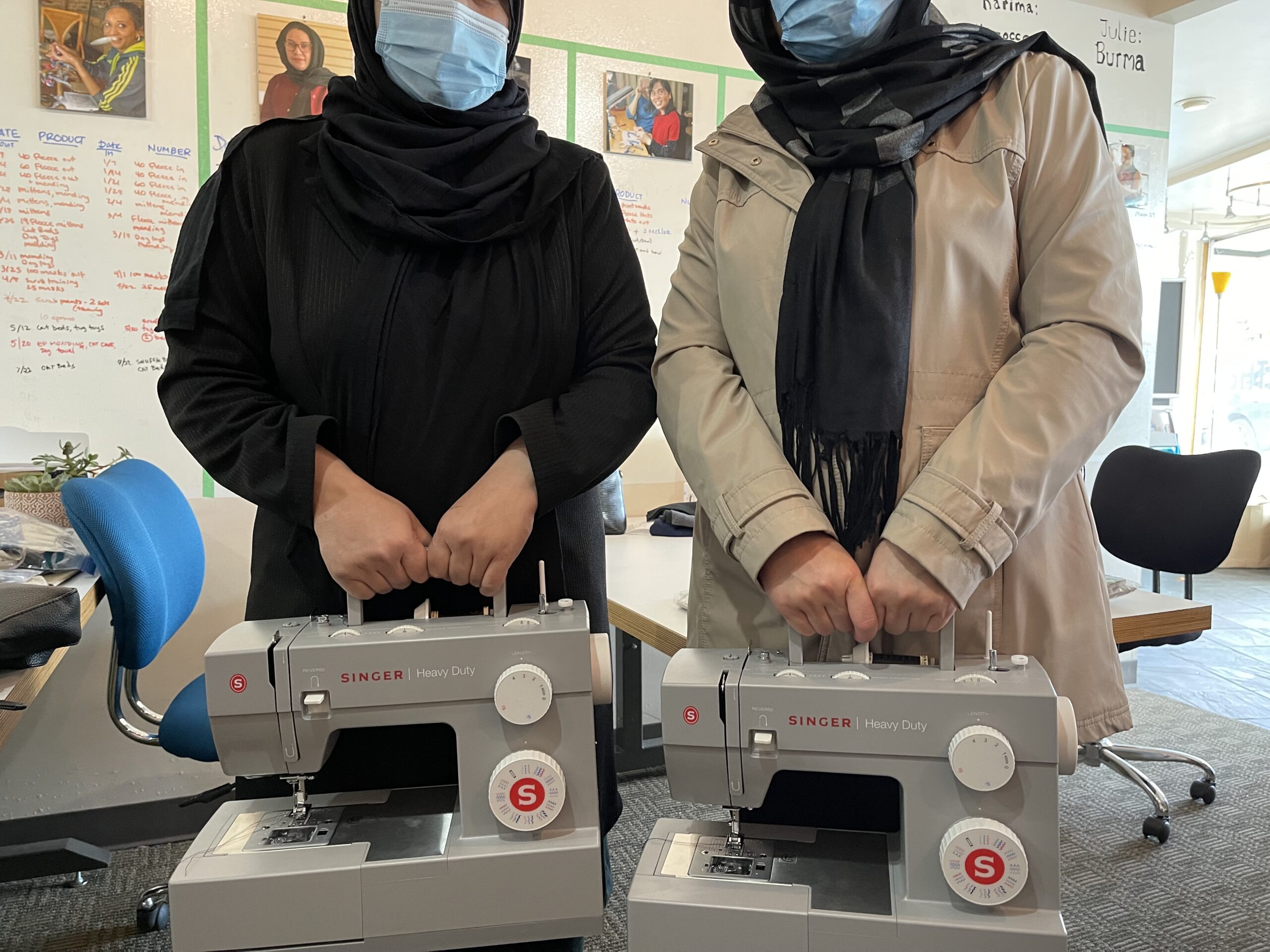
“Sewing is a universal language,” Ming-Ming told us. “When women come to Seattle from all over the world, it can be daunting and scary. But when they see a sewing machine, hear it running, and touch the fabric, it’s something familiar. These are skills they already carry with them to America. They shouldn’t be overlooked. They should be celebrated and invested in.”
That understanding inspired Ming-Ming to found Refugee Artisan Initiative (RAI) in 2017, where she spent nearly a decade helping immigrant and refugee women earn income through sewing and textile reuse. Women transformed discarded materials into useful products while gaining skills, confidence, and greater financial independence.
Ming-Ming recalls women proudly receiving their first paychecks, purchasing vehicles, and contributing to their families’ ability to buy homes. These experiences reinforced her belief that economic development should build on the strengths people already possess.
Now, she’s bringing that vision into a new chapter.
Launching CareMakers Collective
Launched in 2026, CareMakers Collective creates two career pathways for immigrant and refugee women: sewing and textile reuse, and professional caregiving.
“I was very intentional, because I’m looking at two skills that are often overlooked and undervalued,” Ming-Ming explained. “Sewing is a universal language, and caring for other people is something we all understand. But many women don’t know how to professionalize those skills here in the U.S.”
The model responds to two interconnected needs. Many immigrant and refugee women arrive with valuable skills but face barriers to dignified employment, including predatory employers taking advantage of limited English proficiency and unfamiliarity with U.S. systems and labor laws. Meanwhile, Washington’s growing and diverse aging population needs caregivers who understand their languages, cultures, and traditions.
For Ming-Ming, whose career also includes more than two decades as a clinical pharmacist, connecting these opportunities makes sense.
Beyond jobs: Building economic power
CareMakers represents a promising approach to community wealth building—one that starts with the talents already present in communities and seeks to translate them into lasting economic opportunity and prosperity.
Ming-Ming believes conventional workforce development too often focuses on training without ensuring that participants have meaningful opportunities afterward.
“Training people without a real pathway is doing them a disservice. You are creating an illusion if you can’t deliver on what comes next. We need to listen to the people we’re serving, because not everybody is the same. They have different needs, different desires, and different situations.”
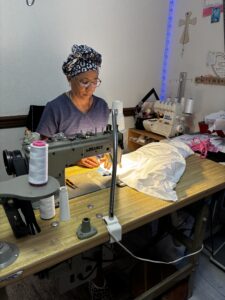
Her vision goes beyond helping women earn their first paychecks. She wants to build pathways toward financial independence, leadership, and greater control over their economic futures.
That thinking has recently led Ming-Ming to explore worker-owned home-care cooperatives.
After attending a national gathering focused on home-care cooperatives, she began considering how cooperative ownership might address the low wages, limited worker voice, and extractive employment practices common in caregiving.
“The current system is very extractive. Even those who belong to unions, their wages are still not very good. I really believe the co-op model is a way to make caregiving a long-term, rewarding, and sustainable career. Otherwise, people don’t feel valued. They feel like they’re just a body, without support.”
Worker cooperatives offer a different model in which caregivers jointly own and help run a home-care business, giving workers a voice in business decisions and a share in the economic value they create. Ming-Ming is beginning conversations with cooperative development organizations about what such a model could look like in Seattle.
CareMakers’ role is to support refugee and immigrant women in choosing the path that fits their lives—whether that is employment with an agency, individual-provider work, or, for women who want it, a cooperative that builds collective power and wealth.
Coming home to the Chinatown–International District
For Ming-Ming, establishing CareMakers in Seattle’s Chinatown–International District (CID) means more than finding a new location. As a first-generation Chinese American who has spent years building economic opportunities across immigrant and refugee communities, it marks a meaningful new chapter—rooting her work in a neighborhood rich with Asian American history, community institutions, and traditions of mutual support.
CareMakers’ new home is in the International District Village Square I development, a project of the Seattle Chinatown International District Preservation and Development Authority (SCIDpda). Founded in 1975, SCIDpda has spent five decades working to preserve the Chinatown–International District as a cultural and economic home for Seattle’s Asian American communities. Through affordable housing, community economic development, and support for local businesses, SCIDpda has played a vital role in protecting the neighborhood from displacement and helping its residents, businesses, and cultural institutions remain rooted and thrive.
“I’m really grateful that I’ll be right in the middle of the Chinatown–International District,” Ming-Ming shared. “Even within that block, we have so many partners we can work with.”
She envisions a welcoming hub where women can learn, earn income, repair and reuse textiles, connect with neighbors, and explore caregiving opportunities.
Looking five years ahead, Ming-Ming hopes women entering CareMakers will become financially independent, develop new careers, and eventually train and support the next generation.
“I would love to see a cooperative model that gives women more voice, more opportunities, and more confidence,” she said. “I believe people thrive not through an extractive model, but through one where they feel they have a voice and are invested in having that voice.”
How to Support CareMakers Collective
Help recruit ten women for paid sewing training. CareMakers is seeking refugee and immigrant women with industrial sewing experience or at least five years of sewing experience. U.S. work authorization is required.
Sewing assessments will take place at 718 8th Ave S, Seattle, on:
- November 11th: 9:30 AM–12 PM
- November 17th: 1–4 PM
- November 18th: 1–4 PM
The four-week paid training begins the week of November 23rd. Advance registration is required; no walk-ins.
Register or share the opportunity: https://caremakers.org/signup/sewing
Donate, partner, or learn more: CareMakers welcomes financial support and connections with community organizations, employers, funders, and cooperative development partners.
Website: https://caremakers.org/ | Email: [email protected] | Phone: 206-321-1502
Ming-Ming has been a part of the People’s Economy Lab Network for over six years. Her work, and the work of CareMakers Collective, are powerful examples of circular economy and community wealth building in action.


